Disclosure: This site may contain affiliate links. If you purchase through these links, we may earn a commission at no additional cost to you.
What It Means to Be a Greater Sportsman
A manifesto for anyone who believes that the outdoors is more than a hobby and that hunting, fishing and exploring are invitations to become better human beings.
Introduction
The phrase “Greater Sportsman” isn’t a marketing slogan. It is a standard and a mindset that reaches well beyond the next harvest or the next trophy. It speaks to who we are when we step into the woods, cast into the wind, paddle down a river or glass an open field. It invites us to see the outdoors not as a personal playground but as a classroom, a sanctuary and a proving ground where character is built and tested.
To be a Greater Sportsman is to recognize that the outdoors has given us more than any store, screen or job ever could. It has provided food, purpose, challenge, peace and perspective. It has given us traditions handed down from grandparents and mentors, lessons written by time and the responsibility to steward those gifts for the next generation. We measure our successes not by the number of animals we harvest or photos we post but by the person we become and the world we help leave behind.
This long‑form piece lays out what it means to embrace that identity. It is the foundational article for GreaterSportsman.com and a call to anyone who wants to do more than simply participate. This is about becoming greater in every sense of the word.
More Than a Hobby
Hunting, fishing and exploring are not weekend hobbies. They are ancient callings that connect us to something real. Long before convenience stores and heated cabins, there were people who understood that survival demanded skill, awareness and respect. Those who took more than they needed did not last long. Those who honored the land and the wildlife thrived and passed that wisdom down. We are beneficiaries of that lineage. Now we are the stewards of it.
Treating the outdoors as a hobby cheapens it. Hobbies are optional. Stewardship is not. When the seasons close, the Greater Sportsman mindset doesn’t end. It shapes how we treat our family, how we handle work, how we serve our community and how we make everyday decisions. It asks us to carry the lessons of the field which are patience, humility, observation, perseverance into town halls, kitchens, offices and neighborhoods.
The Heart of a Greater Sportsman
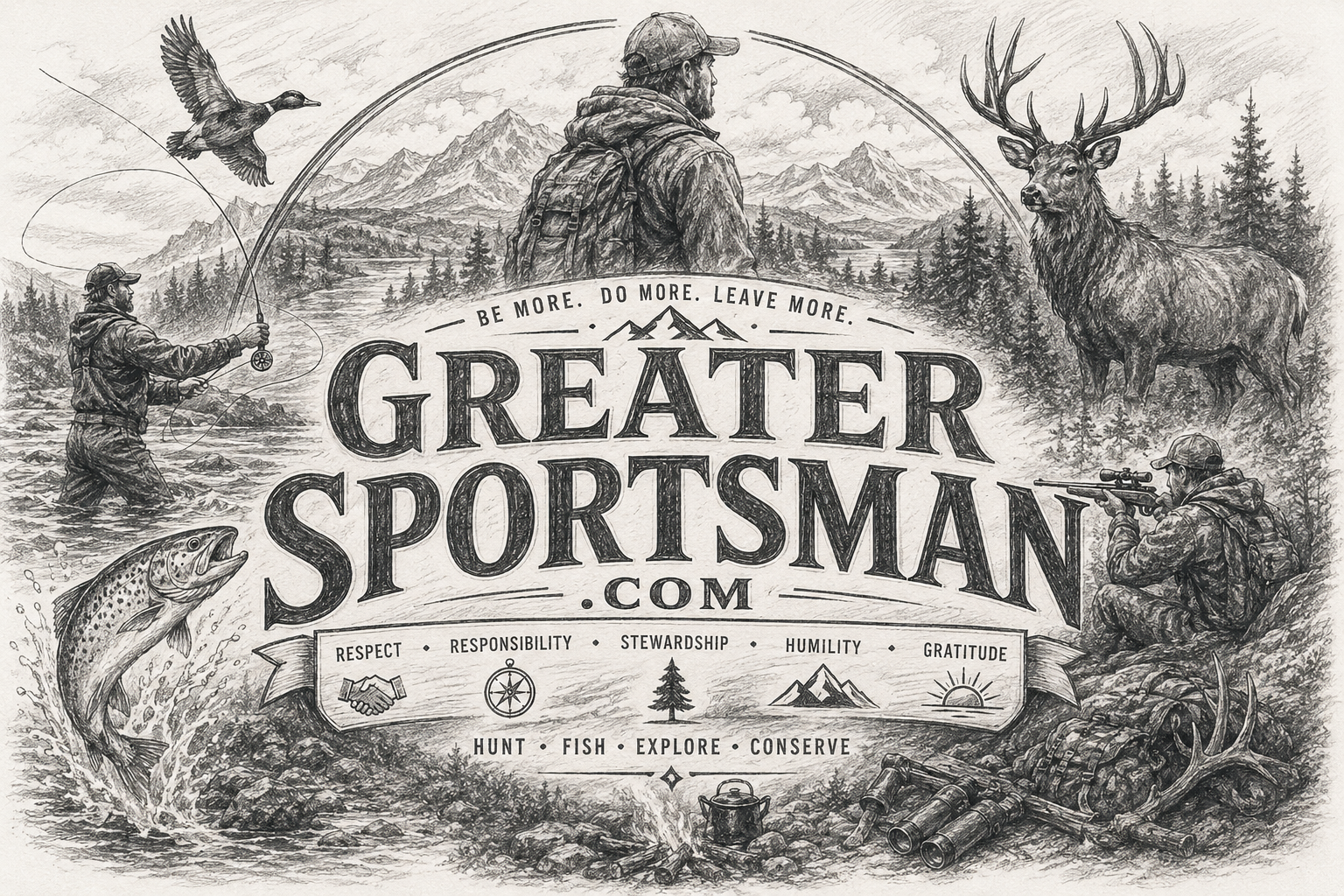
At its core, being a Greater Sportsman means living by five unshakeable truths. These are not slogans; they are standards. They separate someone who merely participates from someone who makes the outdoors and life better.
1. Respect – for the land, the wildlife and the people who share it with you. Respect means leaving a place better than you found it. It means honoring property boundaries, obeying seasons and limits, and seeing every creature as part of a larger web of life.
2. Responsibility – to make ethical choices and accept the consequences of your actions. Responsibility means practicing fair chase, taking clean shots, retrieving game, and properly disposing of waste. It also means owning your mistakes and fixing them.
3. Stewardship – to protect, preserve and improve resources for future generations. Stewardship demands habitat conservation, invasive species control, trail maintenance, water quality protection and supporting organizations that defend public lands and wildlife.
4. Humility – to remain a student of nature and never stop learning. Humility shows up when you admit you don’t know everything, ask questions of experienced outdoorsmen and women, and respect the knowledge of local communities and indigenous peoples. It also means recognizing that success is not guaranteed and that the outdoors will humble you faster than any human ever could.
5. Gratitude – to never take for granted the access, opportunity and abundance we enjoy. Gratitude fosters a desire to give back through volunteering, teaching, donating and simply saying “thank you” for a sunrise or a successful harvest.
Living by these pillars transforms hunts and fishing trips into something much larger. They become rituals that refine our character and draw us closer to each other and to the natural world.
The Greater Sportsman Mindset
It Starts in the Heart
Being a Greater Sportsman begins with intention. It means choosing integrity over shortcuts and experience over ego. The outdoors is not a place to conquer but a place to connect, learn and give back. When you head afield you ask, “How can I be better because of this?” instead of “What can I get from this?”
Greater sportsmen and women:
· Value the process more than the outcome. Success is sweet but the journey, the scouting, the practice, the sleepless nights and the quiet mornings make us who we are.
· Seek understanding before judgment. We learn from elders, from locals and from each experience we have. When we see a problem, we ask why before we criticize.
· Choose integrity when no one is watching. Whether or not there is a social media post or a buddy in the blind, we behave as though the next generation is watching because they are.
Skill and Preparation
Respect and responsibility are meaningless without skill. A Greater Sportsman is a perpetual student. The goal isn’t to become the best shot, the most successful angler or the most decorated trapper. It is to never stop learning.
Essential competencies include:
· Land and water literacy – reading terrain, currents, winds and weather patterns. Understanding how ecosystems work and how to travel safely through them.
· Wildlife knowledge – identifying species, recognizing behaviors, understanding habitats and migrations, and knowing how human actions affect each.
· Field craft and survival – building a fire in wet conditions, treating water, navigating without GPS, first aid, and emergency shelter building.
· Equipment mastery – knowing how to choose, maintain and safely operate firearms, bows, fishing tackle, boats, optics, knives and other gear.
· Regulation awareness – being up‑to‑date on hunting and fishing seasons, bag limits, protected species and restricted areas. Being licensed, permitted and insured where required.
Learning never ends. We sharpen our aim, practice calls, tie knots and study maps not only to increase our chances of success but to minimize suffering, respect the quarry and prove ourselves worthy of the privilege of taking a life.
Ethics and Fair Chase
Ethics are not legal minimums. They are personal standards that sometimes exceed the law. Fair chase is the principle that gives game a reasonable chance to escape and requires the hunter to rely on skill rather than unfair advantage. For anglers, ethics might mean properly handling fish for catch‑and‑release, using barbless hooks where appropriate and respecting spawning closures. For trappers, ethics mean checking traps regularly and using humane sets.
An ethical sportsman:
· Knows the difference between legal and right and chooses right when in doubt.
· Takes only high‑percentage shots at appropriate ranges and angles to ensure a quick kill.
· Recovers wounded game promptly and exhausts all efforts to retrieve it.
· Does not take shots across property lines or into unsafe backstops.
· Avoids pressure on vulnerable wildlife during extreme weather or breeding seasons.
· Calls out unethical behavior in constructive ways and educates those who may not know better.
Conservation and Stewardship
Modern hunters and anglers exist because of conservation. Populations of wild turkey, white‑tailed deer, wood ducks and many fish species are healthy today because sportsmen advocated for seasons, limits and funding for wildlife management. The North American Model of Wildlife Conservation built on the idea that wildlife resources belong to all citizens and must be managed for the benefit of present and future generations is a product of hunters and anglers who cared.
Stewardship involves more than buying a license. It includes:
· Supporting habitat projects – volunteering with local fish and game agencies, land trusts and conservation groups to plant trees, restore wetlands, remove invasive plants and maintain trails.
· Advocating for public lands – writing letters to representatives, attending meetings and voting to keep public lands accessible for hunting, fishing and recreation.
· Contributing financially – purchasing conservation stamps, memberships and gear that allocate a portion of proceeds to habitat work. Donating to organizations that protect and expand habitat.
· Practicing Leave No Trace – packing out trash, minimizing campfire impacts, staying on designated routes, respecting wildlife and other visitors, and being considerate of host communities.
· Educating others – teaching friends and family about regulations, species biology and the importance of habitat. Encouraging new outdoorsmen and women to become conservationists as well.
Conservation isn’t an optional part of sportsmanship; it is the foundation upon which all sustainable outdoor pursuits stand.
Mentorship and Community
The outdoors community thrives when knowledge flows across generations. Being a Greater Sportsman means passing down more than tips on where to find birds or how to set a hook. It means instilling values, patience, ethics and joy. For many of us, a parent, grandparent, neighbor or friend opened the door to this way of life. We owe it to them to keep it going.
Ways to mentor and build community:
· Take a youth or novice afield – not to fill a tag for them but to help them learn, feel safe and build confidence. Let them set the pace, ask questions and experience the wonder.
· Share knowledge generously – invite people to join workdays, scouting trips or processing parties. Teach them to clean fish, butcher deer, cook venison or tie flies.
· Celebrate others’ success – applaud the first fish, the first turkey, the first time someone navigates off‑trail without help. Avoid belittling small accomplishments or showing off.
· Use inclusive language – the outdoors belongs to men and women, young and old, rural and urban, veterans and first‑timers. Avoid exclusive cliques or gatekeeping.
· Build networks – join local chapters of conservation groups, attend banquets, volunteer at youth fishing days and show up for public hearings. The louder our collective voice, the more we can protect what we love.
Humility, Gratitude and Self‑Reflection
Nature has a way of revealing who we really are. It shows us our impatience or our discipline, our kindness or selfishness, our courage or fear. A Greater Sportsman uses every experience outdoors as a mirror and an opportunity to grow.
You learn humility when weather ruins your hunt, when fish ignore your best lure, or when you lose your way and must rely on others. You learn gratitude when you watch the sunrise over a misty lake, hear the drumming of a grouse or feel the weight of a harvest animal you’ll feed your family with. Gratitude turns frustration into appreciation and success into generosity.
Self‑reflection means asking yourself after every outing: What did I learn? What could I have done differently? How can I honor the animal, the land and the people better next time? It is a practice of continuous improvement rooted in humility and gratitude.
The Greater Sportsman’s Year‑Round Journey
Becoming a Greater Sportsman doesn’t happen during a single season. It is a year‑round commitment. Below is a seasonal guide to building skills, giving back and growing in character.
Spring: Renewal and Preparation
· Habitat Work: Participate in spring planting, brush clearing, invasive species removal and wetland restoration projects. These efforts support the animals you’ll pursue in the fall.
· Gear Maintenance: Clean and store firearms, bows and tackle after winter. Sharpen knives and hooks. Repair or replace worn gear. An ounce of maintenance prevents a pound of failure.
· Study: Spend time learning about nesting behaviors, migration, food sources and breeding cycles. Understanding these patterns not only prepares you for the next season but fosters appreciation for life’s renewal.
Summer: Practice and Participation
· Skill Building: Practice at the range, shoot 3D archery courses, run clay targets, fly‑cast on backyard lawns, and paddle local waters. Focus on fundamentals and proper form.
· Recruitment: Host or assist at youth fishing days, hunter safety courses or women’s introduction events. Summer is ideal for new participants because weather is mild and attention spans are longer.
· Scouting: Use long days to get afield early and late. Take note of plant growth, water levels, animal sign and human activity. Place trail cameras responsibly and respect private property.
Autumn: Pursuit and Provision
· Hunt and Fish Ethically: Execute what you practiced. Choose high‑percentage shots, use proper tackle, respect property boundaries and follow bag limits. Tag animals immediately. Handle fish gently.
· Share Your Harvest: Invite friends to wild‑game dinners. Donate venison or fish to food pantries where legal. Share recipes, not just meat. Teach people that the outdoors feeds body and soul.
· Reflect: After each hunt or trip, ask yourself how well you adhered to your values. Did impatience cause a rushed shot? Did ego push you beyond your skill? Adjust accordingly.
Winter: Reflection and Renewal
· Review and Plan: Log your successes, failures and observations. Write down improvements you want to make. Plan next year’s trips, skills to learn and conservation projects to join.
· Educate: Attend banquets, seminars and trapper conventions. Read books on ecology, hunting history, fishing techniques and public lands policy. Use winter nights to fill your mind with knowledge.
· Support: Even if seasons are closed, conservation doesn’t stop. Write to legislators, attend policy meetings, donate to habitat programs and engage in online advocacy. Stay active in your community’s outdoor issues.
Modern Challenges and Opportunities
Being a sportsman today isn’t the same as it was a century ago. Technology, social media, land access and environmental pressures have changed the landscape. A Greater Sportsman adapts to these realities without abandoning core principles.
Technology and Fair Chase
Rangefinders, trail cameras, GPS devices, high‑powered rifles, drones and online maps have made hunts more efficient. Used responsibly, they can aid precision and safety. Used irresponsibly, they can erode fair chase.
Ask yourself:
· Does this technology give me an unfair advantage or compromise the animal’s ability to escape? If so, leave it behind.
· Am I using this tool to improve my skills or to replace them? Technology should supplement, not supplant, practice and experience.
· Is the use of this device legal in my area? Laws often evolve slower than technology; if in doubt, err on the side of tradition and ethics.
Social Media and Storytelling
Platforms like Instagram, YouTube and TikTok connect us with a broader community and help recruit new participants. However, they also encourage sensationalism and comparison. As a Greater Sportsman, you can use social media to uplift the community rather than feed ego.
Guidelines for ethical storytelling:
· Show the full story, not just the kill shot or grip‑and‑grin. Include scouting, passing on animals, the work of tracking, processing meat and the meals that follow.
· Avoid images that disrespect the animal or the land. No blood‑covered trucks, tongue hanging out or feet on carcasses.
· Educate with every post. Explain regulations, habitat needs, ethical dilemmas and conservation efforts. Use your platform to make others better.
· Celebrate others more than yourself. Feature your child’s first catch, your friend’s first deer, or a community conservation project.
Land Access and Public Policy
Growing populations, development and privatization threaten access to land and water. Conservation can’t thrive without places to hunt, fish and explore. A Greater Sportsman stays informed and involved.
Actions you can take:
· Support organizations that fight for public land access and responsible land management.
· Attend city, county and state meetings regarding land use, hunting restrictions, access easements and development proposals.
· Build relationships with private landowners. Show them respect, follow their rules and offer to help with chores. Great relationships open doors for you and others.
· Advocate for “Access Yes” programs and landowner incentives that open private lands for public use. Encourage state wildlife agencies to prioritize access in their budgets.
Environmental Change
Climate and environmental shifts affect migration patterns, spawning cycles, plant growth and disease outbreaks. A Greater Sportsman pays attention to these signs and adjusts accordingly. We cannot control the weather, but we can choose to act:
· Support science‑based management decisions even when they restrict seasons or limits. They ensure long‑term abundance.
· Adapt your practices. Fish during cooler parts of the day to avoid stressing fish in warm water. Shift hunting pressure away from drought‑stricken areas.
· Participate in citizen science programs that track wildlife populations, water quality and habitat changes. Share your observations with agencies and researchers.
· Reduce your own environmental impact by minimizing fossil fuel use, properly maintaining vehicles and reducing waste.
The Path to Becoming a Greater Sportsman
Becoming greater is not about achieving perfection but about pursuing progress. It is about doing the next right thing. Below is a roadmap to guide your journey. It is not linear because some steps happen simultaneously or repeat often but it provides structure.
1. Define Your Why: Clarify why you hunt, fish or explore. Write it down. Knowing your reasons will keep you grounded when you face criticism, failure or temptation to cut corners.
2. Commit to the Pillars: Adopt the five pillars which are respect, responsibility, stewardship, humility and gratitude as personal values. Reflect on them regularly. Share them with others.
3. Invest in Education: Take hunter education and boater safety courses. Read books on ecology, conservation history and outdoor skills. Attend workshops on first aid, orienteering, trapping or fly tying.
4. Practice Year‑Round: Shoot your bow in summer and your rifle in winter. Tie flies in spring and pick mushrooms in fall. Learn wild edibles, tracking, tree identification and watercraft operation. Mix fun with practice.
5. Serve and Mentor: Join a conservation organization. Volunteer at youth events. Take someone new with you each season. Share your knowledge not to impress but to empower.
6. Reflect and Adjust: Keep a journal. After each outing write what you saw, did, learned and would change. Use your entries to set goals and track growth.
7. Advocate: Speak up for wildlife, wild places and ethical practices. Vote with conservation in mind. Support science‑based policies even when they limit your own opportunities.
8. Model Excellence: Behave in ways that make others proud to associate with sportsmen. When someone hears you’re a hunter, angler or trapper they should think of a person of integrity, generosity and humility.
9. Create Legacy: Teach your children, nieces and nephews. Mentor neighbors. Donate gear. Document family recipes. Plant trees you will never sit under. The greatest compliment you can receive is someone becoming a better person because of the example you set.
Our Promise and Invitation
GreaterSportsman.com exists to inspire, equip and challenge you to live this standard every day. Through stories, skills, conservation tips and community, we will help you become the kind of sportsman the outdoors and the world needs.
This is not about perfection. It is about progress. We will share ancient wisdom and modern insights, celebrate mentors, highlight conservation victories and address controversies honestly. We promise to prioritize ethics over clicks, stewardship over consumption and mentorship over isolation. We are students of the outdoors. Together, we become greater.
The Call to Action
Every day is a new opportunity to be a Greater Sportsman. Get outside. Learn something. Help someone. Protect something. Lead someone. Leave something better behind. The next generation is watching. The future is in your hands.
Be skillful. Be ethical. Be a steward. Be a mentor. Live with purpose.
Be a Greater Sportsman.