Disclosure: This site may contain affiliate links. If you purchase through these links, we may earn a commission at no additional cost to you.
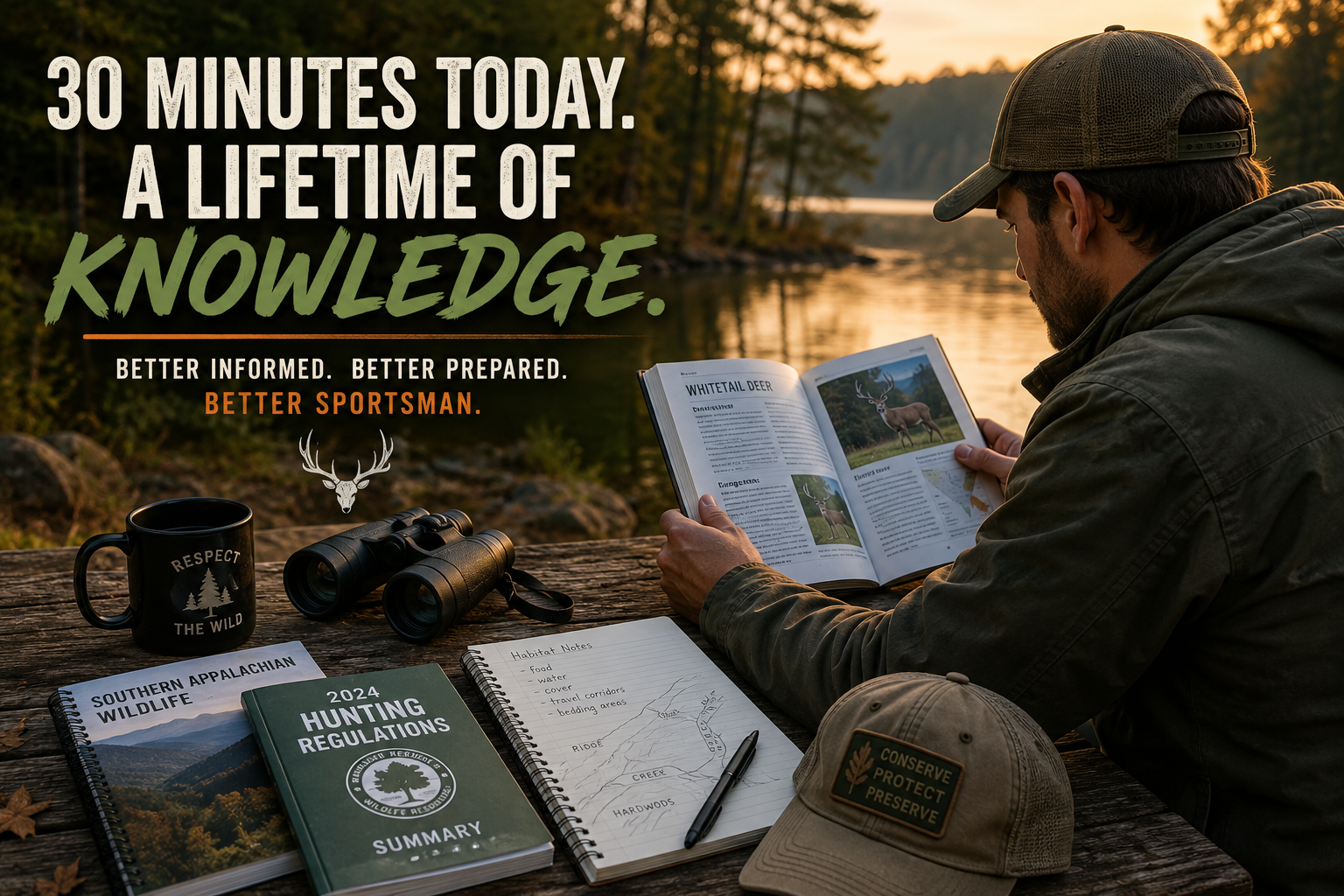
Spending 30 Minutes Learning Something New About Local Wildlife, Habitat, Regulations, or Conservation
Most people assume becoming a better outdoorsman requires spending more money, buying better gear, traveling farther, or hunting and fishing more often. While experience in the field certainly matters, there is another habit that can dramatically improve your success, deepen your appreciation for nature, and strengthen your role as a sportsman and it costs nothing but a little time.
Spend 30 minutes learning something new.
Just thirty minutes.
Half an hour devoted to understanding local wildlife, habitat conditions, hunting regulations, fishing rules, conservation efforts, migration patterns, land management practices, or environmental changes can make you a more effective outdoorsman than another hour spent scrolling social media or watching television.
The greatest sportsmen are rarely the ones with the most expensive equipment. More often, they are the people who never stop learning.
The Outdoors Rewards Knowledge
Nature has always favored those who pay attention.
A hunter who understands deer behavior is more successful than a hunter who owns the newest rifle.
An angler who understands seasonal fish movements catch more fish than someone using the latest lure.
A turkey hunter who understands habitat and breeding behavior consistently finds birds while others wonder where they disappeared.
Knowledge is one of the few outdoor advantages that compounds over time.
Every fact you learn builds on something else.
Every lesson improves future decisions.
Every bit of understanding makes you more aware of what is happening around you.
The outdoors is a giant puzzle. The more pieces you gather, the clearer the picture becomes.
Why Most People Stop Learning
Ironically, many outdoorsmen stop learning after they gain a few years of experience.
They become comfortable.
They hunt the same properties.
They fish the same lakes.
They follow the same routines.
Eventually they begin relying on habit instead of curiosity.
The problem is that nature never stands still.
Wildlife populations change.
Weather patterns shift.
Habitats evolve.
Regulations are updated.
New conservation challenges emerge.
An outdoorsman who stops learning eventually starts falling behind.
The best sportsmen remain students for life.
Learn About the Wildlife Around You
One of the easiest ways to spend thirty productive minutes is learning about local wildlife.
Most people only know a fraction of what lives around them.
Even experienced hunters often focus only on their target species.
Yet every animal plays a role in the ecosystem.
Learning about predators, prey species, migratory birds, insects, reptiles, and native mammals creates a deeper understanding of the land.
For example:
What foods do deer prefer during different seasons?
How far does a whitetail typically travel daily?
What causes turkey populations to rise or decline?
How do drought conditions affect waterfowl migration?
Which native plants provide critical habitat for quail?
These answers help you become more successful while also building appreciation for the natural world.
The more you learn, the more fascinating the outdoors becomes.
Understand the Habitat
Wildlife cannot exist without habitat.
In fact, habitat often matters more than the animals themselves.
Many unsuccessful hunters spend all their time studying deer and very little time studying where deer live.
Great sportsmen study the land.
They learn:
Food sources
Water sources
Cover
Bedding areas
Travel corridors
Nesting habitat
Seasonal changes
When you understand habitat, wildlife behavior begins making sense.
You stop wondering where animals are.
You begin understanding why they are there.
This shift in perspective is one of the biggest breakthroughs any outdoorsman can experience.
Know the Regulations
Many sportsmen only look at hunting and fishing regulations right before a season opens.
That is a mistake.
Regulations exist for a reason.
They protect wildlife populations.
They preserve opportunities.
They ensure ethical harvest.
Spending thirty minutes reviewing current regulations each year can prevent costly mistakes and improve your understanding of wildlife management.
Learn:
Season dates
Bag limits
Possession limits
Public land rules
Special permits
Conservation regulations
The best sportsmen don't follow regulations because they fear penalties.
They follow them because they understand the purpose behind them.
Learn How Conservation Actually Works
Many people enjoy wildlife without understanding where conservation funding comes from.
That knowledge matters.
Hunters and anglers have been among North America's greatest conservation supporters for decades.
License sales.
Excise taxes.
Duck stamps.
Habitat restoration programs.
Wildlife management initiatives.
All of these efforts contribute to healthier wildlife populations and improved public access.
When sportsmen understand conservation, they become stronger advocates for protecting the resources they enjoy.
Learning about conservation also helps counter misinformation.
It gives you facts instead of assumptions.
It allows you to explain the value of hunting, fishing, and outdoor recreation to others.
Become a Better Steward
Knowledge creates responsibility.
The more you learn about wildlife and habitat, the harder it becomes to ignore problems.
You notice litter.
You recognize habitat destruction.
You understand invasive species.
You appreciate restoration projects.
You become more invested in protecting the places you love.
This is one of the hidden benefits of learning.
It transforms users into stewards.
Instead of simply taking from nature, you begin looking for ways to give back.
Small Investments Create Big Results
Thirty minutes may not sound like much.
But consider the math.
Thirty minutes per week equals twenty-six hours per year.
Thirty minutes twice a week equals fifty-two hours.
Over ten years, that becomes hundreds of hours of accumulated knowledge.
Most experts are not experts because they learned everything at once.
They simply learned a little more than everyone else every year.
Knowledge compounds.
The outdoors rewards consistency.
Easy Ways to Spend Your 30 Minutes
You don't need a classroom.
You don't need expensive courses.
You simply need curiosity.
Here are a few ideas:
Read State Wildlife Reports
Most state wildlife agencies publish reports on population trends, habitat projects, and management plans.
Study Native Plants
Learn which plants support wildlife in your region.
Watch Conservation Videos
Many wildlife agencies publish educational content online.
Listen to Outdoor Podcasts
Experts often share decades of knowledge in a single episode.
Read Scientific Studies
Many wildlife research projects are publicly available and surprisingly readable.
Attend Local Meetings
Conservation groups frequently host public meetings and educational events.
Explore Public Land Maps
Learning your local landscape can be as valuable as spending time in the field.
The Outdoors Is a Classroom
One of the most beautiful things about nature is that there is always something new to discover.
No one ever learns it all.
There is always another species to understand.
Another habitat to explore.
Another conservation challenge to solve.
Another lesson waiting to be learned.
That endless opportunity for growth is part of what keeps people connected to the outdoors for a lifetime.
Final Thoughts
The next time you have thirty free minutes, resist the temptation to waste them.
Instead, invest them.
Read about a wildlife species.
Study habitat.
Review regulations.
Learn about conservation.
Explore a public land map.
Watch a biologist explain animal behavior.
Those small moments of learning may not seem significant today.
But over time they transform ordinary outdoor enthusiasts into knowledgeable, ethical, and effective sportsmen.
The greatest sportsmen are not the ones who know everything.