
Disclosure: This site may contain affiliate links. If you purchase through these links, we may earn a commission at no additional cost to you.
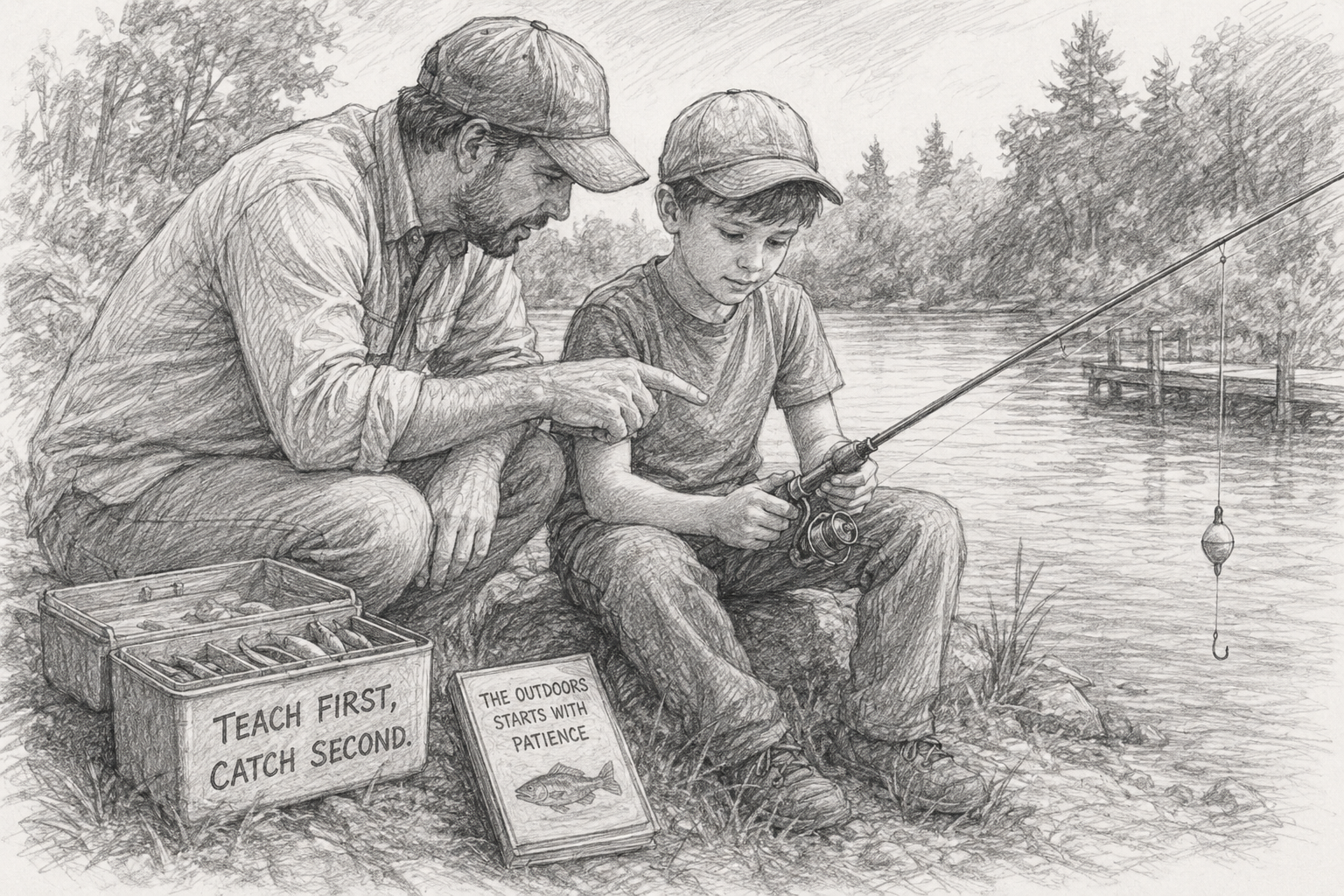
Taking a Kid, Friend, or Newcomer Fishing: Teach First, Catch Second
There is a big difference between taking someone fishing and teaching someone to love fishing.
Anyone can put a rod in another person’s hand, bait a hook, point them toward the water, and hope something bites. That may produce a fish. It may even produce a good picture. But if the goal is to bring a kid, friend, spouse, neighbor, or complete beginner into the outdoor life, catching fish cannot be the only measure of success.
The first fishing trip is not really about fish. It is about comfort, confidence, curiosity, and belonging. It is about helping someone feel that the water is a place where they are welcome. It is about showing them that fishing is not a test they must pass, but an experience they can grow into.
A greater sportsman understands this. When you take a newcomer fishing, your job is not to prove how much you know. Your job is to make the other person want to come back.
Start With the Right Goal
The biggest mistake experienced anglers make with beginners is treating the trip like a normal fishing trip. They wake up too early, fish too long, use complicated gear, chase difficult species, and measure the day by results. That may work for someone already hooked on fishing. It rarely works for a newcomer.
A first trip should be built around one goal: make it enjoyable.
That means choosing easy access, simple tackle, decent weather, and a place where the beginner can relax. It may mean fishing from a dock, pond bank, pier, creek, or quiet shoreline instead of launching into an all-day boat trip. It may mean leaving the trophy water alone and picking a place where bluegill, perch, small bass, catfish, or stocked trout give the newcomer a chance to feel action.
The goal is not to impress them. The goal is to include them.
If they catch fish, great. If they learn how to cast, tie a knot, bait a hook, identify a fish, read the water, or sit quietly and enjoy the morning, that is success too.
Keep the Gear Simple
Beginners do not need a lecture on rod power, line diameter, bait presentation, reel ratios, or seasonal patterns. They need equipment that works without overwhelming them.
A simple spinning rod, push-button reel, cane pole, or light tackle setup is enough. Use hooks, floats, sinkers, and bait that are easy to understand. A bobber rig may not be the most advanced setup in your tackle box, but it is one of the best teaching tools ever made. It gives the beginner something visual to watch. It shows when a fish is interested. It creates anticipation.
Before handing over the rod, explain only what they need to know in the moment. Show them how to hold it. Show them how to cast safely. Show them how to close the bail, reel slowly, and keep the line tight. Do not turn the bank into a classroom. Teach in small pieces.
A newcomer can absorb only so much at once. Too much instruction can turn excitement into stress.
Teach Safety Without Making It Scary
Fishing is peaceful, but hooks are sharp, banks can be slick, and water deserves respect. Safety should be taught early, calmly, and naturally.
Explain that hooks should always be treated carefully. Show them how to look behind before casting. Teach them to walk, not run, near the water. If you are fishing from a boat, dock, or fast-moving bank, make life jackets non-negotiable for kids and wise for anyone who is unsure around water.
Do not bark orders unless there is immediate danger. Beginners, especially children, respond better when safety is explained as part of being a responsible angler. You can say, “We always check behind us before casting because we do not want to hook anybody,” or “We stay back from that edge because muddy banks can give way.”
Safety is not meant to create fear. It is meant to create awareness.
Let Them Do as Much as They Can
It is tempting to do everything for a beginner. Tie the knot. Cast the line. Set the hook. Reel in the fish. Unhook it. Re-bait. Repeat. That may produce more fish, but it does not produce confidence.
The better approach is to help only as much as needed.
If a kid wants to reel, let them reel. If a friend wants to try tying a knot, let them try. If they want to cast and it lands five feet from shore, celebrate the effort and help them improve. If they tangle the line, fix it with patience. Tangles are part of fishing. Missed casts are part of fishing. Lost fish are part of fishing.
The lesson is not that everything must go perfectly. The lesson is that mistakes are normal and manageable.
Confidence grows when beginners feel trusted. Give them room to participate, even if it slows the day down.
Explain the Why, Not Just the What
A good teacher does more than give instructions. A good teacher helps a newcomer understand the reason behind the action.
Do not just say, “Cast over there.” Say, “Fish like shade, and that tree is creating shade near the bank.” Do not just say, “Reel slower.” Say, “Sometimes the bait looks more natural when it moves slowly.” Do not just say, “Be quiet.” Say, “Sound travels through water and vibration can make fish cautious.”
These little explanations turn fishing from a random activity into a puzzle. They help the beginner see that angling is about observation. Wind, shade, current, depth, structure, insects, baitfish, and temperature all become part of the story.
Once someone begins noticing those details, they are no longer just waiting for a fish. They are learning to read the outdoors.
Do Not Let Frustration Lead the Trip
Every experienced angler has had a slow day. Fish do not always cooperate. Weather changes. Lines tangle. Bait disappears. Kids get bored. Friends get distracted. Newcomers may ask the same question three times.
This is where your attitude matters most.
If you get irritated, the beginner will remember that. If you complain about the bite, they may feel like the trip is failing. If you act disappointed because they missed a fish, they may become embarrassed. If you rush them, correct them constantly, or make them feel clumsy, they may decide fishing is not for them.
Patience is the real teaching tool.
A beginner does not need you to be perfect. They need you to be steady. Smile at the tangle. Laugh at the bad cast. Turn a missed fish into a good story. Let them know that every angler has been there.
The tone of the day will matter more than the number of fish.
Celebrate Small Wins
A first fish is exciting, but it is not the only win worth celebrating.
Celebrate the first good cast. Celebrate learning to bait a hook. Celebrate spotting minnows near the bank. Celebrate identifying a bird, frog, turtle, or insect. Celebrate patience. Celebrate quiet focus. Celebrate the moment they ask a question because curiosity has taken hold.
For children especially, these small wins build the memory of the trip. They may not remember the size of the fish, but they will remember feeling proud.
Take pictures, but do not make the picture the whole point. Some of the best memories are not grip-and-grin photos. They are muddy shoes, tackle box snacks, a bobber disappearing, a dragonfly landing on a rod tip, or a kid whispering because they think the fish can hear them.
Teach Respect for the Fish
New anglers often need guidance on handling fish. Teach them early that fish are living creatures, not toys or props.
Show them how to wet their hands before touching a fish. Teach them to support the fish gently. Explain why they should not squeeze it, drop it, or keep it out of water too long. If you are keeping fish, explain why you keep only what you plan to use. If you are releasing fish, show them how to do it carefully.
This is one of the most important lessons of the day. Fishing is not just about taking. It is about responsibility. Whether a fish goes in the cooler or swims away, it deserves respect.
A newcomer who learns that from the beginning will become a better angler.
Keep the Trip Short Enough to End Well
Many beginners do not need a full day on the water. Kids especially may have a shorter attention span than adults. A two-hour trip that ends with smiles is better than a six-hour trip that ends in exhaustion.
Watch their energy. If they start wandering, complaining, or losing interest, it may be time to change the activity or wrap up. Skipping rocks, exploring the bank, eating a snack, or looking for bait can reset the mood. But do not force the fishing to continue just because you want one more bite.
Always try to end before the beginner is completely worn out.
Leave them wanting more.
Make the Invitation Matter
After the trip, ask what they liked best. Listen to the answer. It might not be what you expect. Maybe they liked casting. Maybe they liked the boat ride. Maybe they liked catching bait, seeing turtles, or eating lunch outside.
That answer tells you how to shape the next trip.
Fishing becomes a lifelong pursuit when it grows naturally. Some people will become serious anglers. Some will simply enjoy a quiet evening by the water now and then. Both outcomes are worth respecting.
The purpose of taking someone fishing is not to create a copy of yourself. It is to give them a doorway into the outdoors.
Teach First, Catch Second
Catching fish is wonderful. It creates excitement and gives beginners a reason to believe. But if catching becomes the only goal, we miss the deeper opportunity.
When you take a kid, friend, or newcomer fishing, you are introducing them to patience, responsibility, awareness, and respect. You are teaching them that success is not always measured in pounds or inches. Sometimes success is a better cast, a calmer mind, a new question, or a person who says, “Can we do this again?”
That is the real catch.
A greater sportsman knows that the future of fishing depends on more than full stringers and big photos. It depends on how well we welcome the next person to the water.
So, teach first. Catch second.