Disclosure: This site may contain affiliate links. If you purchase through these links, we may earn a commission at no additional cost to you.
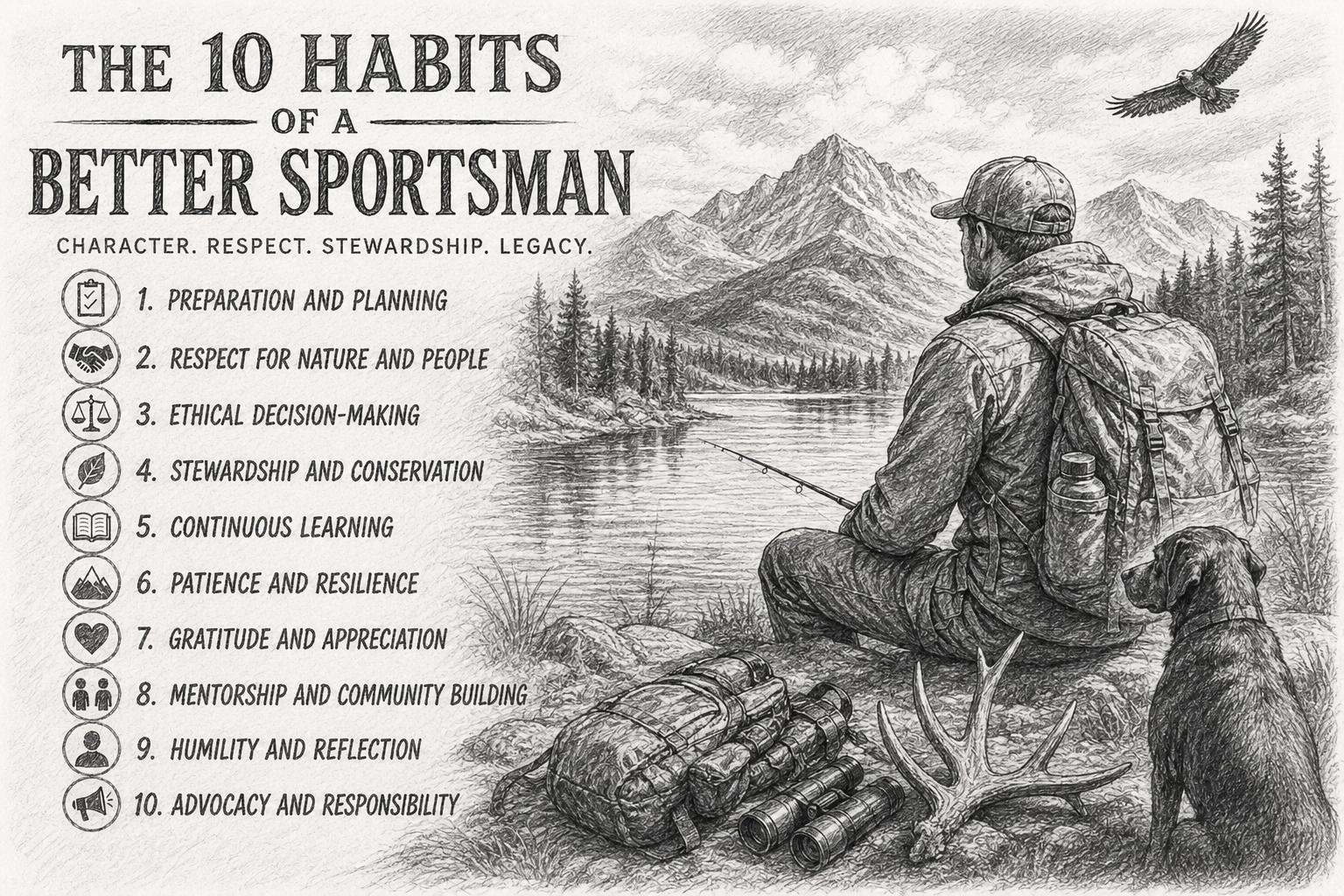
The 10 Habits of a Better Sportsman
Personal development is not separate from the outdoors; it is intertwined. A true sportsman does not simply harvest game or catch fish. He or she grows with each outing, refines character through challenges and acts as a steward of natural resources. This article outlines the ten core habits that define a better sportsman, combining personal growth principles with practical outdoor ethics. Each habit is a pillar of a life well‑lived in and out of the field.
Ten Habits in Brief
1. Preparation and Planning
2. Respect for Nature and People
3. Ethical Decision‑Making
4. Stewardship and Conservation
5. Continuous Learning
6. Patience and Resilience
7. Gratitude and Appreciation
8. Mentorship and Community Building
9. Humility and Reflection
10. Advocacy and Responsibility
These habits overlap and reinforce one another. Practicing them builds a sportsman whose actions inspire others and protect the outdoors for future generations.
1. Preparation and Planning
Effective sportsmen prioritize preparation. Whether planning a backcountry elk hunt or a simple day on a local lake, they lay groundwork well before stepping outside. Preparation demonstrates respect for the animal and the environment and cultivates personal discipline.
· Research Seasons and Regulations: Know the legal dates, bag limits, size restrictions and access requirements for the species you pursue. Study maps, check property boundaries and obtain proper permits.
· Equipment Readiness: Maintain firearms, bows, rods, reels and vehicles. Check optics, sharpen knives and inspect safety gear (life jackets, first aid kits, headlamps).
· Physical Conditioning: Train your body for the demands of your chosen pursuit. Hiking, climbing, paddling, shooting and hauling game require endurance and strength.
· Mental Rehearsal: Visualize potential scenarios firing at different angles, landing a large fish, navigating in bad weather. Mental preparation reduces panic and improves decision‑making under stress.
· Contingency Planning: Prepare for emergencies. Carry communication devices, know basic first aid, pack extra food and clothing, and share your itinerary with someone at home.
The habit of preparation extends beyond the outdoors. It spills into professional life and family, teaching you the value of research, organization and readiness in every endeavor.
2. Respect for Nature and People
Respect is the cornerstone of sportsmanship. A better sportsman respects wildlife, habitat, private property, fellow hunters and anglers, and non‑participants who share the landscape.
· Wildlife Respect: Observe animals quietly. Do not harass them unnecessarily or take shots outside your effective range. Allow them the opportunity to escape.
· Habitat Respect: Avoid damaging vegetation and soils, pack out trash and minimize campfire impacts. Stick to trails where required, and use designated launch sites.
· Property Respect: Ask permission to access private land. Honor the conditions landowners set. Close gates, leave fences intact and never cut or damage locks.
· People Respect: Greet other outdoorsmen courteously. Share space on public waters and land. Give others the benefit of the doubt. Avoid negative confrontations and road rage at boat ramps or trailheads.
Being respectful fosters mutual cooperation. It also models positive behavior for new participants and reinforces public support for hunting and fishing.
3. Ethical Decision‑Making
Ethics go beyond legal requirements. An ethical sportsman chooses right even when nobody is watching. He or she embraces fair chase and practices responsible harvest.
· Fair Chase: Avoid technology or techniques that give an undue advantage. Do not shoot from vehicles, use drones to herd animals or spotlight deer after dark. Give wildlife a fair chance to escape.
· Selective Harvest: Take animals or fish at sizes and ages that support population health. Pass on trophy animals if doing so promotes herd genetics and balanced age classes. Release large, fertile fish when appropriate.
· Humane Practices: Aim for clean, killing shots. Track wounded game diligently. Keep fish in water during catch and release. Use traps that minimize suffering.
· Honesty in Reporting: Tag game immediately. Accurately record harvest data. Do not manipulate reporting systems or falsify information.
Making ethical decisions consistently builds self‑respect and credibility. It preserves public trust and secures hunting and fishing privileges for generations to come.
4. Stewardship and Conservation
Stewardship means leaving the natural world better than you found it. Conservation is not only about purchasing licenses; it involves hands‑on contribution and advocacy.
· Habitat Projects: Participate in tree planting, stream restoration, invasive species removal and wildlife habitat improvement projects. Volunteer with local conservation groups.
· Financial Support: Buy habitat stamps, memberships and specialized tags that fund conservation. Donate to reputable nonprofits and support state wildlife agencies.
· Personal Impact: Reduce your footprint carpool to hunting sites, choose non‑lead ammunition where appropriate, use reusable containers and avoid single‑use plastics.
· Policy Participation: Stay informed about public land legislation, access issues and wildlife policies. Attend hearings, write letters and vote for conservation‑minded policies.
Stewardship is both an individual and collective responsibility. When you invest time and resources in conservation, you ensure healthy populations and habitats for future hunters, anglers and wildlife watchers.
5. Continuous Learning
The outdoors is an endless classroom. A better sportsman embraces lifelong learning and adapts to new information.
· Skill Development: Take courses in archery, fly fishing, tracking, trapping, bushcraft, first aid and wildlife photography. Attend seminars, watch tutorials and practice regularly.
· Ecological Knowledge: Learn about ecosystems, wildlife biology, phenology, and trophic webs. Understand how weather patterns, climate change and invasive species affect local populations.
· Cultural and Historical Context: Study the history of hunting and fishing traditions. Learn indigenous perspectives and practices. Understand how wildlife policies evolved and why certain regulations exist.
· Technology Literacy: Use mapping apps, GPS devices and weather tools responsibly. Keep current with legal changes around equipment and permissible methods.
Continuous learning keeps your pursuits interesting, prepares you for new challenges and ensures you make decisions based on the best available knowledge.
6. Patience and Resilience
Being outdoors teaches patience and resilience better than any classroom. Game is rarely cooperative, fish don’t always bite and weather often changes plans. Developing a calm, persistent mindset is crucial.
· Accept Delays: Waiting for the right wind, the correct tide or the moment when birds fly into range requires discipline. Resist the urge to rush or take unethical shots.
· Handle Failure: Recognize that an unfilled tag doesn’t mean failure. Each outing is an opportunity to learn and grow. Use unsuccessful hunts or blank days on the water to refine skills.
· Stay Positive: Practice gratitude and focus on the experience. Celebrate small victories like observing wildlife, learning a new trick or simply enjoying quiet time away from screens.
· Adapt Quickly: Change plans when conditions warrant. Move locations, switch tactics or end the day early if necessary. Resilience is about flexibility, not stubbornness.
Patience and resilience also improve life outside the outdoors. They help in relationships, careers and personal projects by teaching you to endure setbacks and find joy in process.
7. Gratitude and Appreciation
True sportsmen view each experience as a gift. Gratitude fosters humility and a deeper connection to the natural world.
· Thank the Land and Wildlife: Develop small rituals of appreciation—taking a quiet moment after a successful harvest, sharing a meal with family, or journaling about the day.
· Appreciate Your Mentors: Thank those who taught you. Acknowledge their patience and effort. Pass on the gift by mentoring others.
· Recognize Privilege: Access to public lands, abundant wildlife and time for recreation are not universal. Be grateful for these opportunities and support policies that expand them to more people.
· Celebrate Non‑Harvest Moments: Enjoy sunrise, the call of geese, the smell of pine or the sound of waves. These sensory experiences provide peace and perspective.
Practicing gratitude cultivates contentment and reduces entitlement. It reminds you that the outdoors owes you nothing; instead, you owe it your thanks and care.
8. Mentorship and Community Building
A better sportsman lifts others. Sharing knowledge and experiences strengthens the outdoor community and preserves traditions.
· Teach Newcomers: Invite friends, family members or colleagues to fish or hunt. Start them with skills appropriate to their level and let them make mistakes under your guidance.
· Support Youth: Volunteer at youth fishing derbies, hunter safety classes, or school outdoor clubs. Donate equipment and time.
· Create Inclusive Spaces: Welcome women, minorities and newcomers. Challenge stereotypes that discourage diverse participants. Use inclusive language and challenge gatekeeping.
· Collaborate with Peers: Join local chapters of conservation groups, attend meetings, organize habitat projects and social events. Strong communities advocate effectively for conservation and access.
Mentorship ensures that the values of ethical, respectful and skilled sportsmanship endure. It also multiplies your impact on the environment and society.
9. Humility and Reflection
Humility keeps ego in check and fosters respect for both success and failure. Reflection allows lessons learned to shape future behavior.
· Accept Mistakes: Admit when you misjudged distance, mis‑read wind or pressured fish too hard. Avoid excuses and instead ask what you can learn.
· Learn from Others: Recognize that you do not know everything, regardless of experience. A new angler might teach you a better knot. A local may suggest a conservation project you never considered.
· Keep Records: Maintain a hunting or fishing journal. Note weather, conditions, sightings and emotions. Review entries before the next season to inform adjustments.
· Separate Ego from Success: Celebrate accomplishments privately. Resist the urge to brag or diminish others. Let your actions speak more than your words.
Practicing humility builds credibility and fosters relationships. Reflection ensures that each experience contributes to personal and communal growth.
10. Advocacy and Responsibility
A better sportsman is also an advocate. Protecting wild places and ensuring equitable access requires civic engagement.
· Stay Informed: Track local, state and federal legislation impacting wildlife, habitat and outdoor recreation. Use reputable sources and attend public meetings.
· Vote Intentionally: Support candidates and policies that prioritize conservation, science‑based wildlife management and public land access.
· Communicate with Leaders: Write letters, send emails and call representatives when policies threaten habitats or access. Share personal stories about how the outdoors enriches your life.
· Hold Peers Accountable: Speak up when you witness unethical or illegal behavior. Encourage compliance with regulations and courteous behavior.
· Lead by Example: Advocate through action. Pick up trash, practice catch‑and‑release responsibly and donate your time to clean‑ups and habitat projects.
Advocacy translates passion into policy. When sportsmen unify their voices, they become a powerful force for conservation and access.
Conclusion
Being a better sportsman goes far beyond filled tags and full coolers. It encompasses preparation, respect, ethics, stewardship, learning, patience, gratitude, mentorship, humility and advocacy. Practicing these ten habits transforms hunting, fishing and outdoor recreation into pathways for personal development and environmental stewardship.
The outdoors offers endless opportunities for growth physically, mentally, emotionally and spiritually. Each sunrise invites us to be more thoughtful, each failure encourages resilience and each success fosters gratitude. When we model these habits, we not only improve ourselves but also inspire the next generation of sportsmen and women to carry forward a legacy of integrity, conservation and community.
Embrace the habits. Live the values. Become a better sportsman and a better person.